Tips for a Strees-Free-Move
Loading & Unloading
•
3 min read
You Have the Truck. Here’s How to Get Ready for Loading Day
Learn how to pack efficiently, protect fragile items, and stay organized before moving day so nothing gets left behind.

You Have the Truck. Here’s How to Get Ready for Loading Day
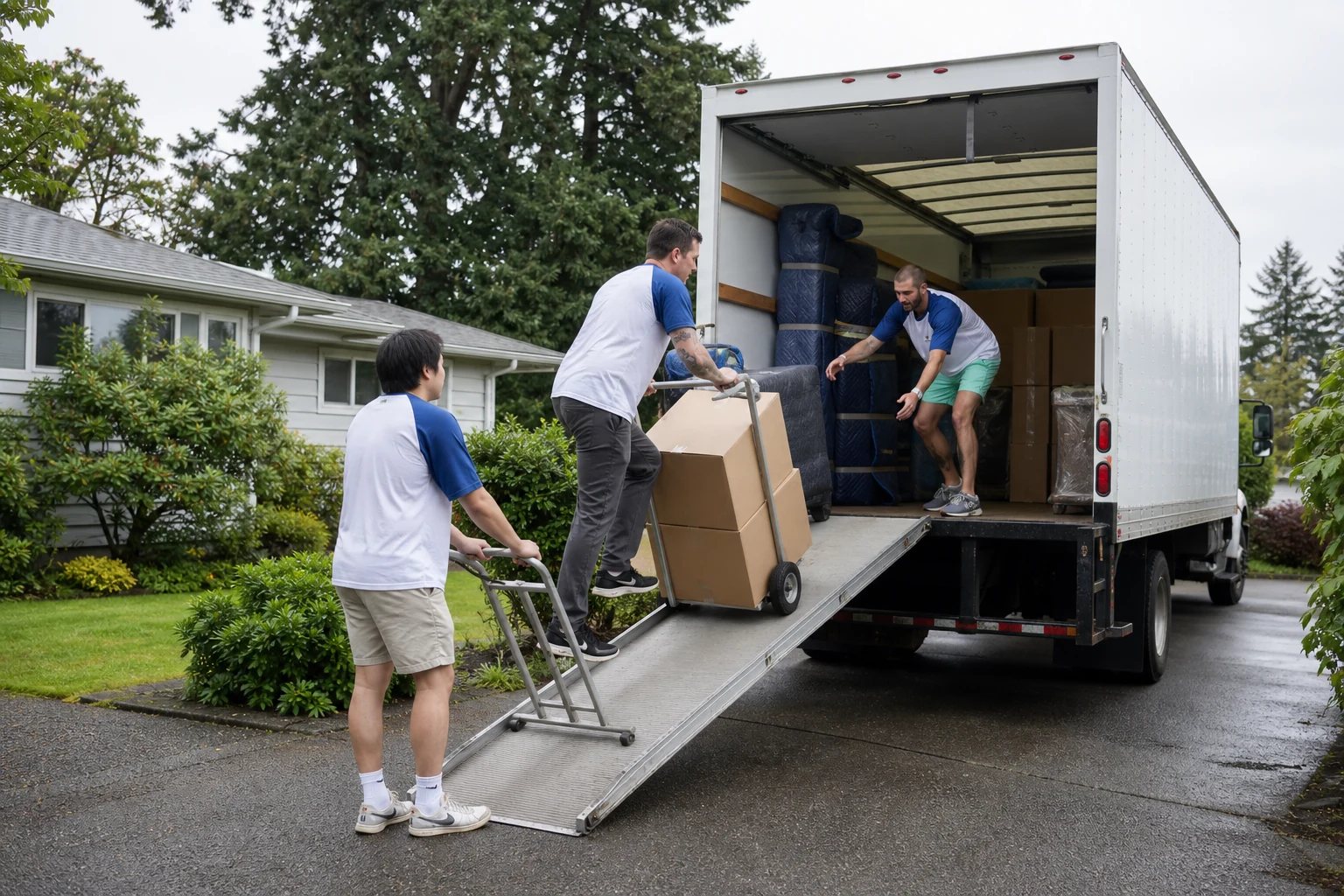
Renting the truck yourself gives you control over one big part of the move. It also creates an important handoff: you provide the truck, trailer, pod, or container; the loading crew needs a clear picture of the space, the access, and what will be ready when they arrive.
People Movers offers loading and unloading help when the customer provides the vehicle or container. The more accurately you describe that setup, the easier it is to review the scope before moving day.
Here is what to have ready.
Send the actual size—not only the brand or model
“A medium rental truck” can mean different things to different people. Share the listed interior dimensions or capacity, along with the vehicle or container type.
If you are using a trailer, pod, or container, include how it opens and where it will sit. For a truck, mention any ramp or liftgate and whether the cargo area has tie-down points. Photos are helpful, especially when the unit is already parked.
The crew can load the space that is available. Choosing and securing an appropriately sized vehicle or container remains an important part of the customer’s plan.
Be honest about what is ready
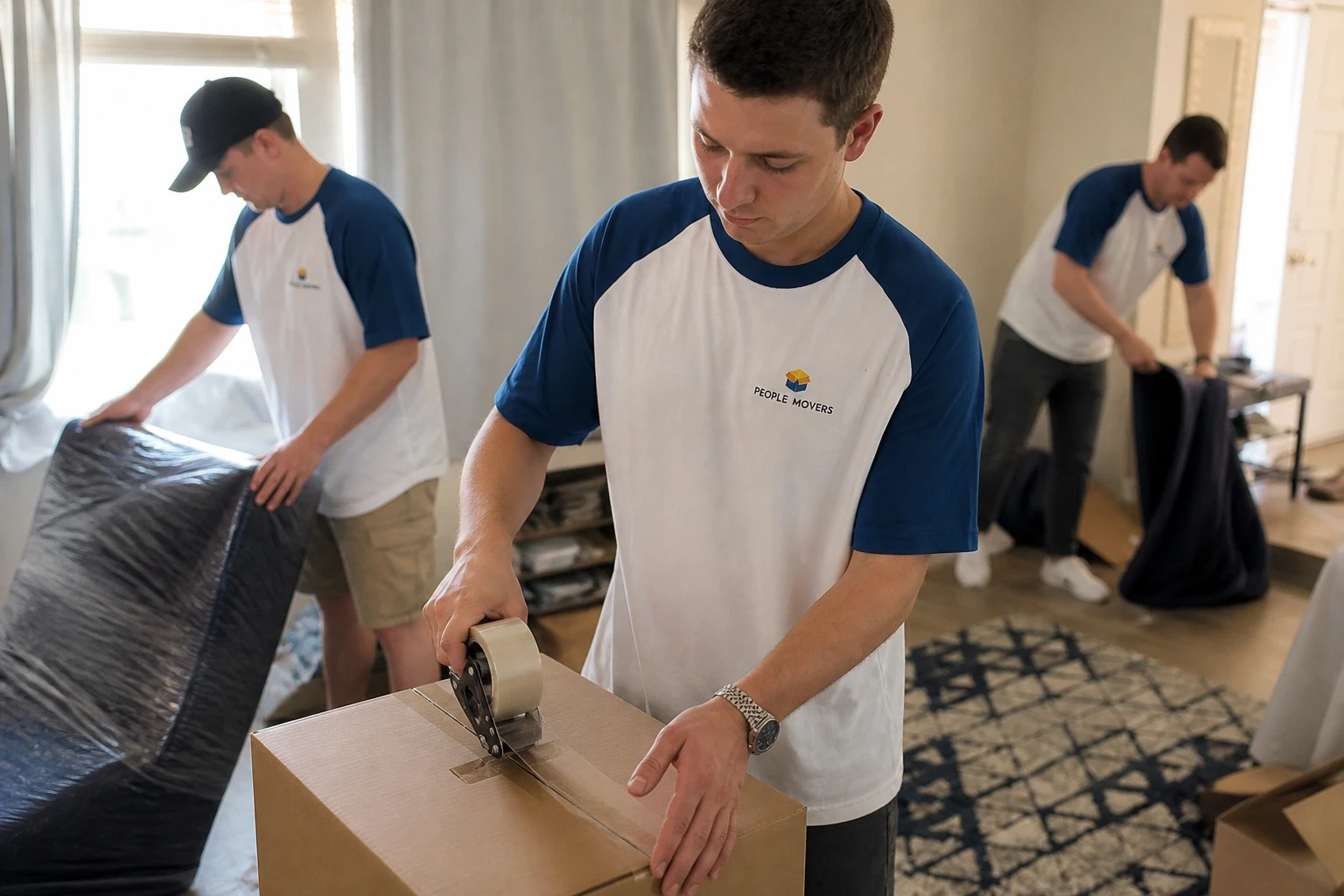
Loading help works best when “packed” means closed, labeled, and ready to carry.
If the kitchen is still half open, clothing is loose on the floor, or furniture still contains belongings, the handoff has changed. That does not make the move impossible; it means the request should include packing or preparation needs rather than assuming everything will be ready for loading.
Before the crew arrives:
Close and tape boxes securely
Avoid boxes so heavy that they cannot be handled safely
Label the destination room on a visible side
Separate anything that is not going
Empty furniture that needs to be moved empty
Gather loose hardware in labeled bags
Flag fragile, oversized, or unusually heavy items
If you want help packing selected rooms or difficult belongings, ask about that before loading day.
Build a clear path and a simple staging area
The fastest route through a home is not always the safest or most practical one. Clear the path from each room to the exit. Move small rugs, cords, plants, shoes, and other tripping hazards. Keep children and pets away from open doors and carrying routes.
If space allows, group sealed boxes and smaller items in a staging area without blocking the main walkway. Keep large furniture where there is room to handle it. Do not create a wall of boxes in front of the one piece that needs to leave first.
Outside, confirm where the truck or container can legally and practically sit. Mention stairs, elevators, gates, long carries, steep driveways, loading restrictions, and anything that separates the door from the cargo space.
Point out the puzzle pieces
A good loading conversation begins with the items that shape the rest of the load.
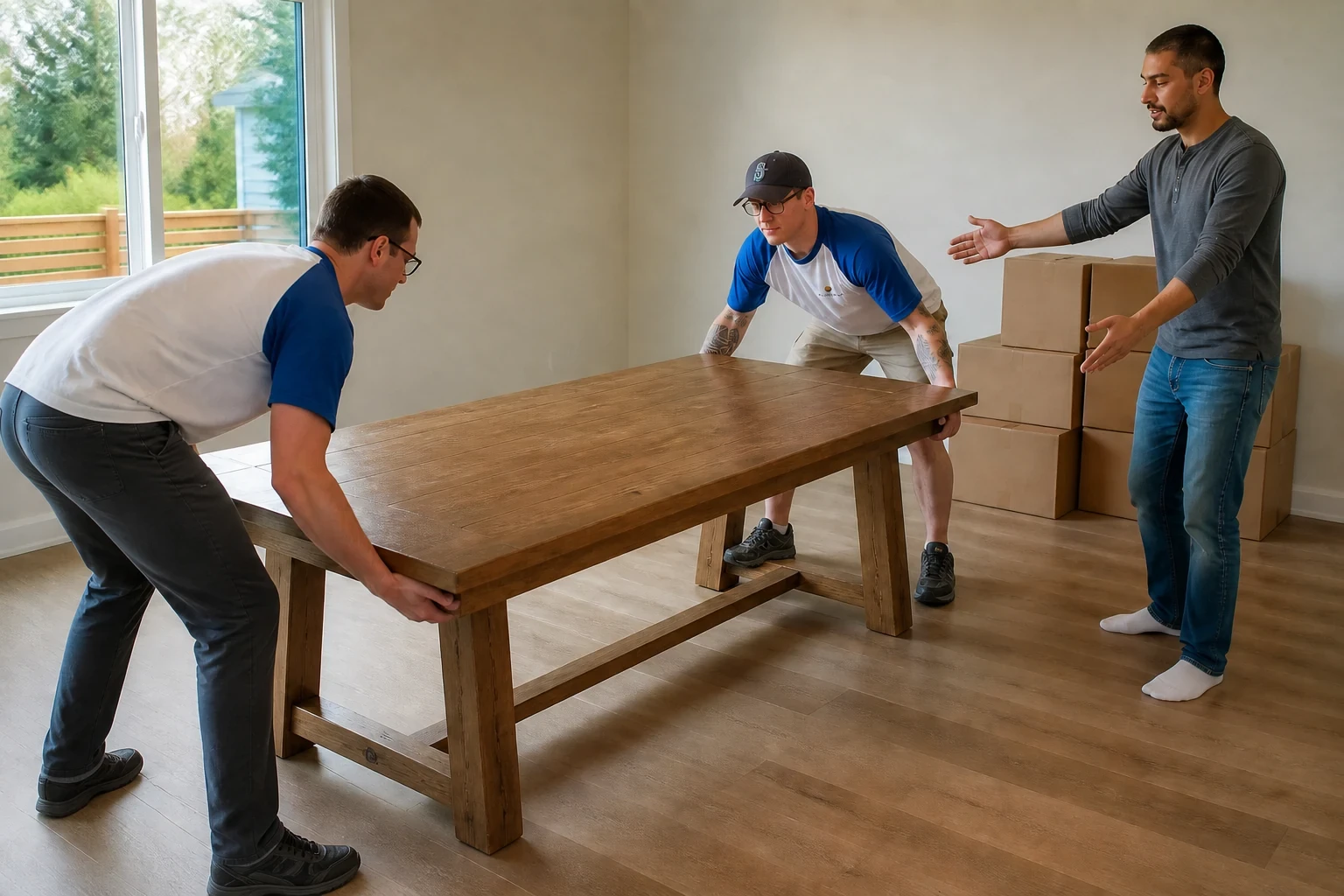
Walk through large furniture, mattresses, appliances, long objects, fragile pieces, and anything that should not have weight placed on it. Mention items that can be disassembled and confirm who is responsible for that work. Set aside parts, cords, shelves, remotes, and hardware so they stay with the correct item.
If something needs to come out early at the destination, say so before it disappears behind everything else. That might be a bed frame, a child’s furniture, work equipment, or the tools needed for setup.
Tell the crew what you hope to access first so they can consider it while planning the load safely.
Label for the unload, not only the move-out
A label should answer the question someone will ask while holding the box: Where does this go?
Use destination-room names that will make sense in the new place. “Bedroom 2—office” is better than “back room.” Put the label on at least one side, not only on top, so it remains visible in a stack.
For priority boxes, add one useful line: “open first,” “bed hardware,” or “kitchen basics.” Keep the system simple enough that you will still use it on the fiftieth box.
Prepare the destination with the same care
Loading day has a second half.
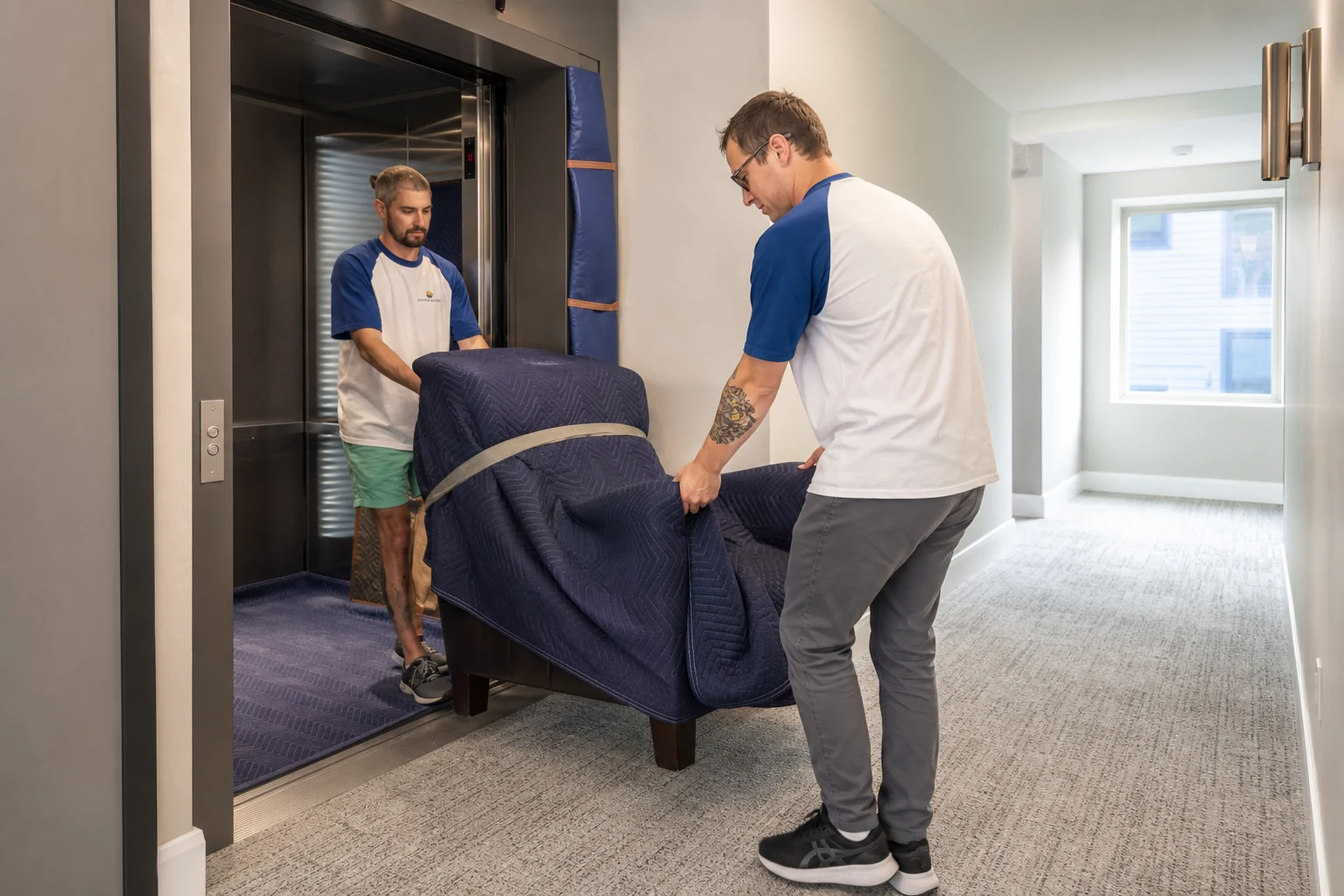
Confirm where the vehicle can stop, how the property is accessed, and whether stairs or an elevator are involved. Make sure someone at the destination can direct furniture placement and answer questions. Put simple room labels on doors if the layout is not obvious.
Before unloading begins, explain any items that need to come off first and any rooms that are not ready. A two-minute destination walk-through can prevent a sofa from reaching the wrong floor.
Keep your own essentials out of the load
Identification, medication, keys, important documents, valuables, chargers, and immediate essentials should remain with you. Put them in a clearly marked bag in your personal vehicle. Do not place that bag near the loading path “just for a minute.”
The same goes for the rental agreement, vehicle keys, access codes, and the contact information needed at the destination.
The useful version of “ready”
Useful readiness looks like a truthful scope, sealed belongings, an open route, a usable vehicle or container, and a clear conversation about the items that drive the plan.
That is enough to turn “we have a truck” into a loading day people can actually picture.
Need the crew without the truck?
Share the size and type of your rental truck, trailer, pod, or container, along with the inventory and access at both locations. People Movers can review the request and confirm availability and next steps.
Ask About Loading & Unloading · Call (425) 549-3393